We need to talk about Lindsay Clancy
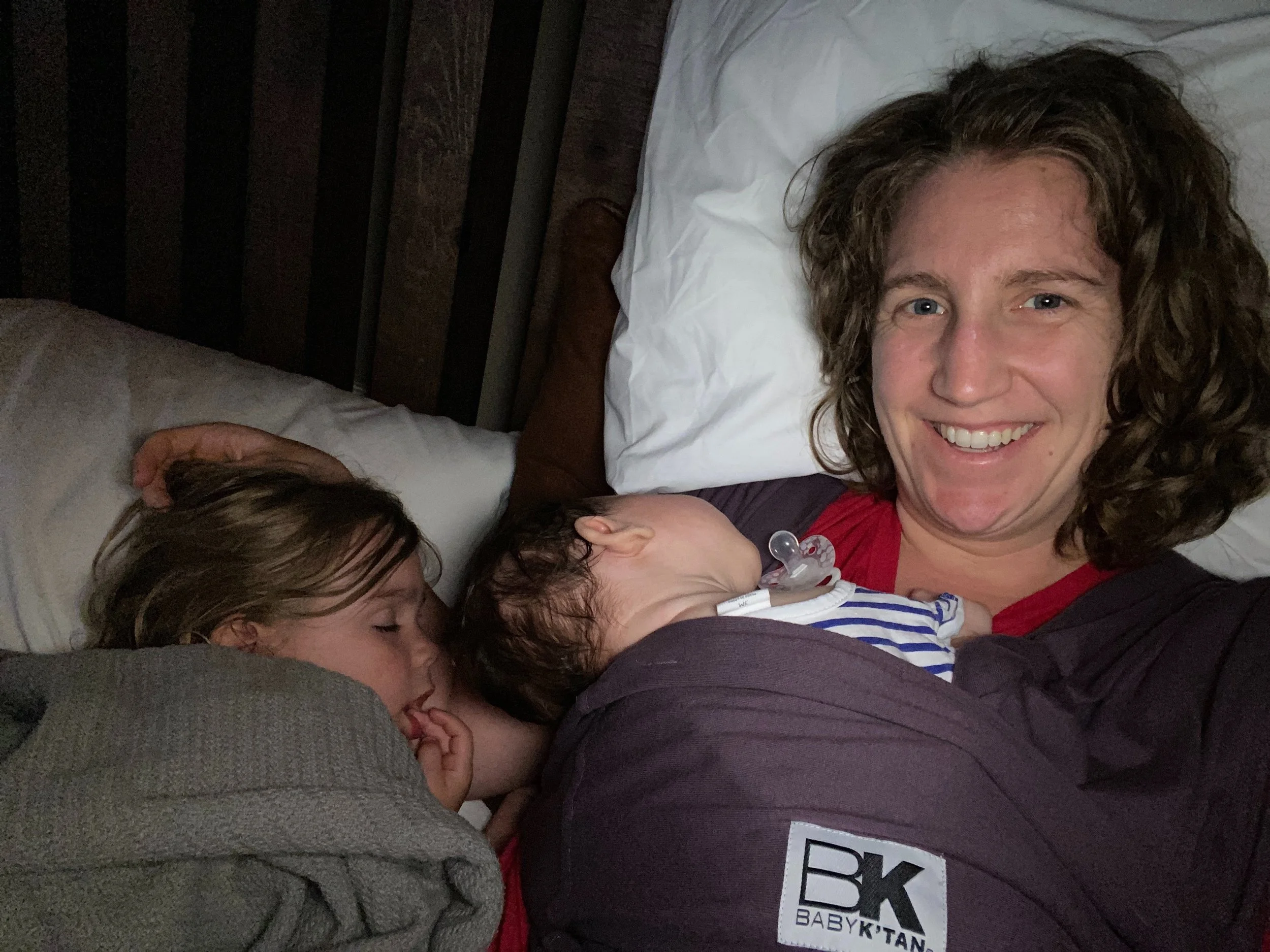
More specifically, what we expect mothers to tolerate before we consider their suffering legitimate.
But first, a content warning: if discussion around any of the subjects of postpartum psychosis, postpartum depression, the death of a child generally, or the murder of a child specifically, would be detrimental to your mental health, please skip this month.
However. If you can manage it—even though these subjects are heavy—I ask you to stick with me. We can’t keep looking away from things that are hard (unless, as I said, they would adversely impact your own mental health journey—the oxygen mask has to go on you first).
That said, this isn’t one to listen to with young ears around.
I want to be very clear up front: I did not watch the trial. I haven’t watched the news since 2016, and I struggle to stay on top of the news generally given the pace of developments in the last few years. I’ve educated myself on the gist and high level summaries of this case (the best summaries I’ve found are from PBS, The Guardian, and the BBC), but I am not coming at you to comment on the facts, or even argue for a particular outcome, even though you probably know me well enough at this point to know I have an opinion. But there are things to process here, and things we need to see as humans so we can try not to repeat them. I feel physically ill for her kids, heartbroken in the most piercing way.
But I feel physically ill for her, too.
Because compassion for Lindsay doesn’t require us to minimize what happened to her children. And acknowledging the role of mental illness doesn’t mean every person with postpartum depression, anxiety, or psychosis is a danger to their children. And fear of being separated from their children is what prevents a lot of moms from seeking help to begin with.
But we don’t make it easy, here, to be a mom (or a woman…) or to access mental healthcare. Even if you can wade through the stigma when you’re already vulnerable, it’s increasingly difficult to find providers who actually take insurance (shout out to my own therapist, who does ♥️) and cost prohibitive for many people if they don’t. If you’re in the postpartum window specifically, by definition you have at least one child you are caring for. Working moms may not have the flexibility with their jobs to discreetly see a provider during the day, and they should not be obligated to explain to an employer why they need to. But many providers don’t take after hours appointments, and even if there is daytime childcare, that child still exists after hours and needs care. Stay at home parents may not have anywhere for that child to be during an appointment. And stay at home parents who may have some child care during the day may not be able to find a provider who has availability during that window.
See what I’m saying?
But also many women don’t recognize that they need help, or they actively hide it because they’re ashamed. Lindsay Clancy did ask for help—repeatedly—which is one of the tragedies of this situation. And I do feel like the bravery of that should not be overlooked.
She is also a former labor & delivery nurse, someone with more exposure than most of us to the realities of postpartum care. So what about women who don’t?
But even if we do know something is wrong, for most of us, it’s so very easy to hide. And it’s so very easy for other people to see the signs and brush it off.
Being a mom is hard.
Sleep deprivation is hard.
Caring for other humans is hard.
She needs a shower!
She needs a pedicure!She needs me-time!
Self-care. Self-care. Self-care.
Yes! These things may all be true! And yes, you do know when you become a parent (hopefully) how hard it's going to be. By definition, parenting—especially in the early years—is hard.
But there comes a point where the hard becomes both unrealistic and unreasonable to expect of a human being. And that’s where we have a huge problem. Because we’ve created a culture where systemic failures are often answered with individualized solutions. Why do we expect that one person will be able to carry this much?
We have a stereotype that’s become a recurring cultural joke about how moms handle it all. Friday a friend of mine sent me this IG post (worth watching—if you don’t have IG, you don’t have to be signed in to watch—but please be aware of language you may not want your kids to hear).
“The saddest part, a lot of moms do all this shit without anyone even saying ‘damn, I see you.’ They keep everybody alive while no one checks who’s taking care of fucking mom.”
Read that again. And internalize the truth in it.
We fail women.
And we fail mothers.
We fail them structurally through things like inadequate parental leave, inaccessible healthcare, inadequate childcare, insurance bullshit, and poor continuity of postpartum care.
And we fail them culturally by romanticizing maternal sacrifice, treating exhaustion as something they just have to get through, by mistaking outward functioning for internal mental wellness, by giving them stupid suggestions that barely scratch the surface of their need, by assuming that moms don’t need help if they don’t ask for it, and then by failing to take them seriously when they’re brave enough to ask.
Most of the time, the people most likely to see when we’re drowning are other moms who are drowning right along with us. We’re in a constant state of falling out of the life raft and hoping one of us is still there to pull us back in. And sometimes that isn’t enough.
In Lindsay Clancy’s case, the people who loved her saw her struggling. They tried to get her help. But it wasn’t enough (see this PBS article).
Because really that’s what scares me the most about this case. Lindsay Clancy knew she was struggling—she repeatedly sought care for her mental health. She did what we’re told to do as moms—she had her village, and she asked for help. So what does it mean if asking for help isn’t always enough?
Lindsay Clancy’s case forces us to confront what happens when we build a culture that tells mothers to ask for help, but then discovers that asking for help isn’t always enough. Lindsay did. And it still ended in tragedy.
I’m not asking you to decide how you think this case should end. But—as a mother—I am asking us to look harder at what we expect mothers to survive, and what we can do about it. Because there are absolutely things in this country we could do to support postpartum mothers, but choose not to. Free or low cost access to doulas. Mandated paid parental leave for mothers (fun fact, FMLA is complicated and, to oversimplify, only applies to protecting jobs of eligible employees at workplaces with 50 or more employees and it's unpaid). Paid parental leave for birth partners in order to support the birthing parent. Access to quality low-cost childcare. Recurring mental health screening and access to quality low-cost mental health support. I’m sure there are more, that’s just off the top of my head. Here is another great IG post from Libby Ward (Diary of an Honest Mom) that sums it up beautifully.
These aren’t impossible problems. They’re choices we’ve made as a society about what to prioritize. And if you’re an elected official or someone of influence—even if it’s small, like you’re an employer—and any of this is in your power to try and help: do better.
If someone you love is or soon will be postpartum, please take the responsibility to truly see the mom in your life very seriously. Mothers don’t stop needing support because they’ve crossed some imaginary timeline—for me, the postpartum period was nearly two years—because even when it doesn’t rise to the level of postpartum psychosis, “just” postpartum depression and anxiety can cause so much suffering, too. Don’t wait for her to ask. Don’t wait until the suffering is impossible to ignore. Don’t wait for her to fall apart. See her before she falls. See her while she’s still standing.
Visible suffering should not be the threshold for care. We have to stop asking whether mothers are strong enough to survive the conditions they’re in, and instead ask why merely surviving is the expectation in the first place.
If you are or soon will be postpartum: I see you. Reach out—to someone in your life, or to me if you need help with finding the courage to use your voice. You don’t have to be falling apart to deserve someone’s help.
Here are some resources to help with postpartum mental health:
Postpartum Support International’s main website, and their phone and text based resources:
Call the PSI HelpLine: 1-800-944-4773 (#1 En Español or #2 English)
Text “Help” to 800-944-4773 (EN) or Text en Español: 971-203-7773